2025
A. List of courses taught during period:
SPRING 2025
ART 150.01 FUNDAMENTAL OF DESIGN IN ART 6
VEE 150.01 BILINGUAL RESEARCH 2
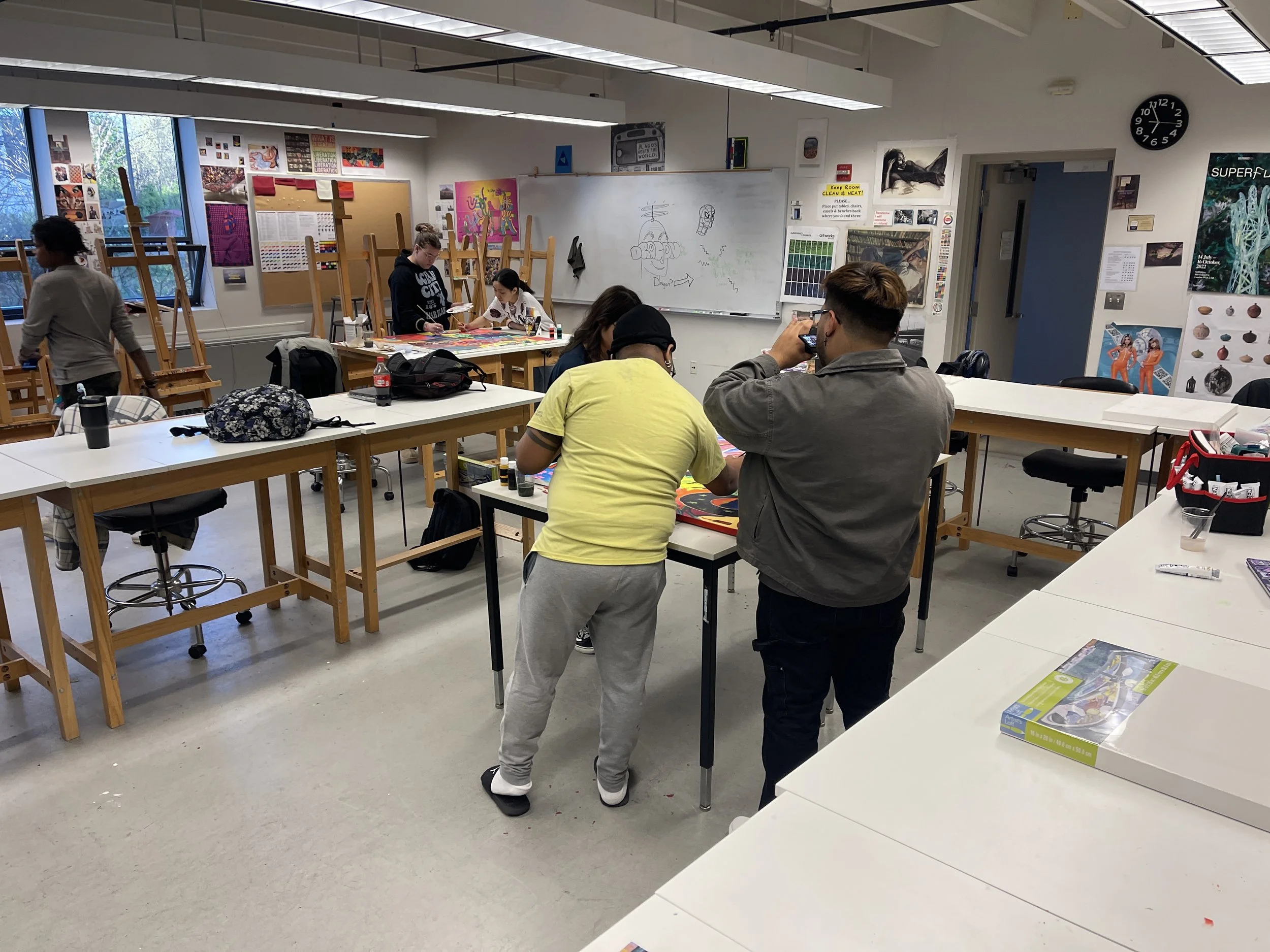
ART 360.01 STUDIES IN PAINTING 7
ART 491.01 PORTFOLIO/SENIOR EXHIBIT 8
ART 492.01 INTERNSHIP 1
B. List of other teaching-related activities (e.g., dissertation committees, course development, unique features, etc.) During the evaluation period.
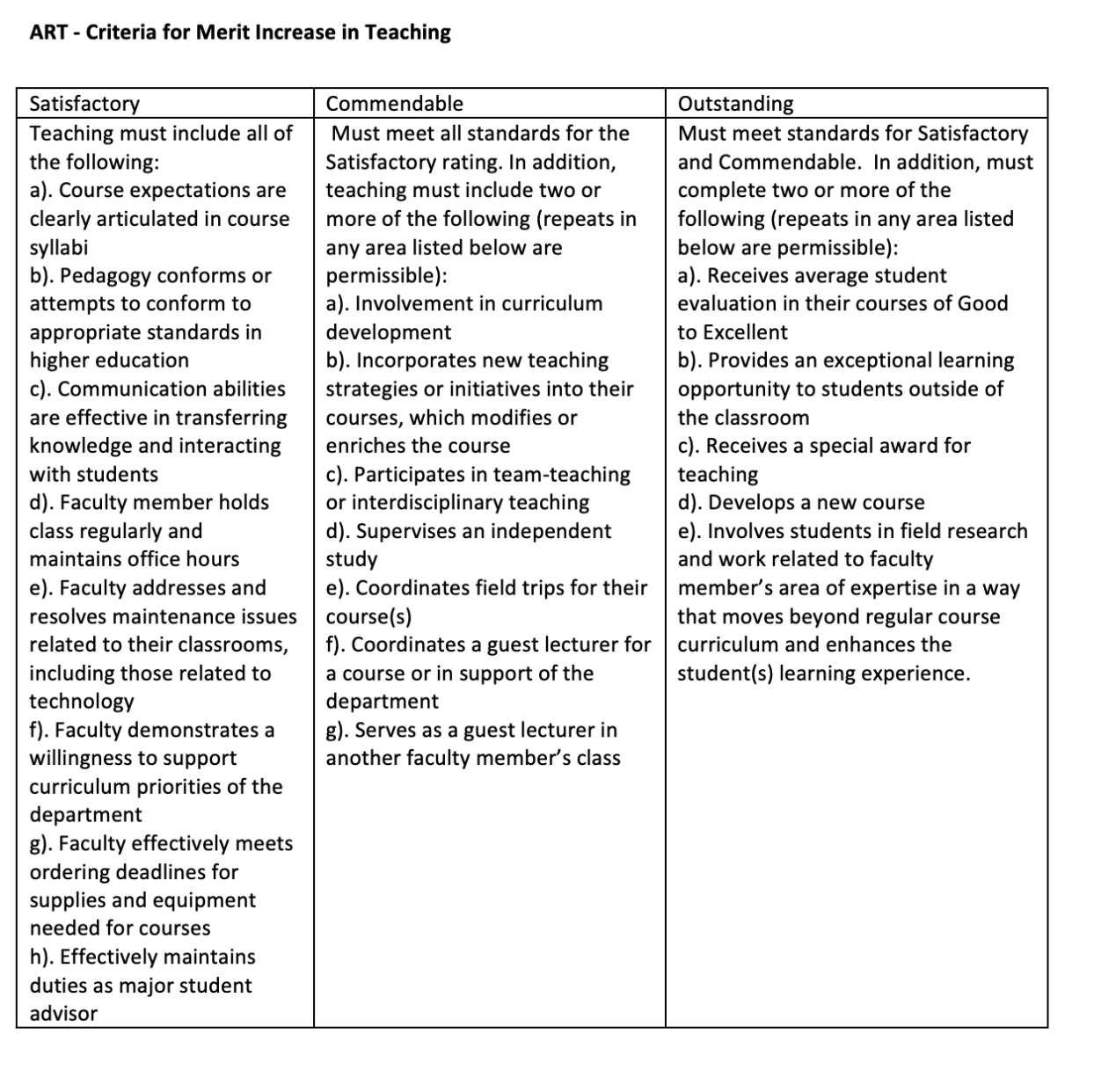
1. Faculty member developed and upgraded the articulated five syllabi (S_a)
2. Faculty member used the pedagogy conform to elevate a higher standard of education in lectures, and lesson plans for five courses in the spring of 2025 (S_b)
3. Updated and posted weekly assignments on Blackboard Ultra (S_c)
4. Recorded attendance on Navigate (S_c)
5. Used American Sign language in the classrooms with students and composed assignments, projects, class activities in English. (S_c)
6. Faculty member regularly taught classes (S_d)
7. Accessible and responsive to students during off office hours (S_d)
8. Extended my office hours to accommodate students for courses (S_d)
9. Used technology device to teach classes with technical tools such as a shared screen to LCD TV, and second screen to preview art techniques (S_e)
10. Participated and supported meetings within the art department (S_f)
11. Faculty member willingly participated in School of Art and Humanities meetings (S_f)
12. Faculty member willingly provided support to the curriculum by updating the syllabus, lectures, lesson plans for five courses (S_f)
13. Effectively inventoried art supplies for courses meeting the ordering deadline ART 150/170/495 (S_g)
14. Successfully maintained duties as Academic advisor for 5 students (S_h)
15. Involvement in transforming the curriculum for the art department Spring 2025 (C_a)
16. Presented 15-minute seminars on the diversity of artists’ biographies and their struggles for Spring 2025 courses by using the PowerPoint tool (C-b)
17. Created and supervised the syllabus, projects for Tinkerlab interns (C_b)
18. Incorporates new assignments/projects as the exit interview, portfolio, and exhibition. (C_c)
19. Assisted in developing courses, syllabi for ART 150/470/491/491 (C_c)
20. Coordinated several field trips for students to include National Museum of African Art, Hirshhorn Museum and Sculpture Garden, National Gallery of Art (East/West Building), and Linda Jordan Art Gallery (Washburn Art Center) (C_e)
21. Coordinated a Senior field trip to Maryland Institute College of Art, Baltimore to visit a deaf graduate student, Daniel Katz-Hernandez (C_e)
22. Daniel Katz-Hernandez as guest lecturer for ART 491 Senior Studio to his studio (C_f)
23. Received the student evaluations for five courses (O_a)
24. Outside tutoring provided to students (O_b)
25. Provided students with an exceptional learning opportunity outside of the classroom by developing several art video tutorials for teaching (O_b)
26. Use the students to preview their work of ART 491 by reserving the spaces at Washburn Art Center (O_b)
27. Created ASL video and written English for assignments, midterm, and final exam (O_b)
28. Created three new courses syllabus, and assignments, VEE 150, ART 470, and ART 491(0_d)
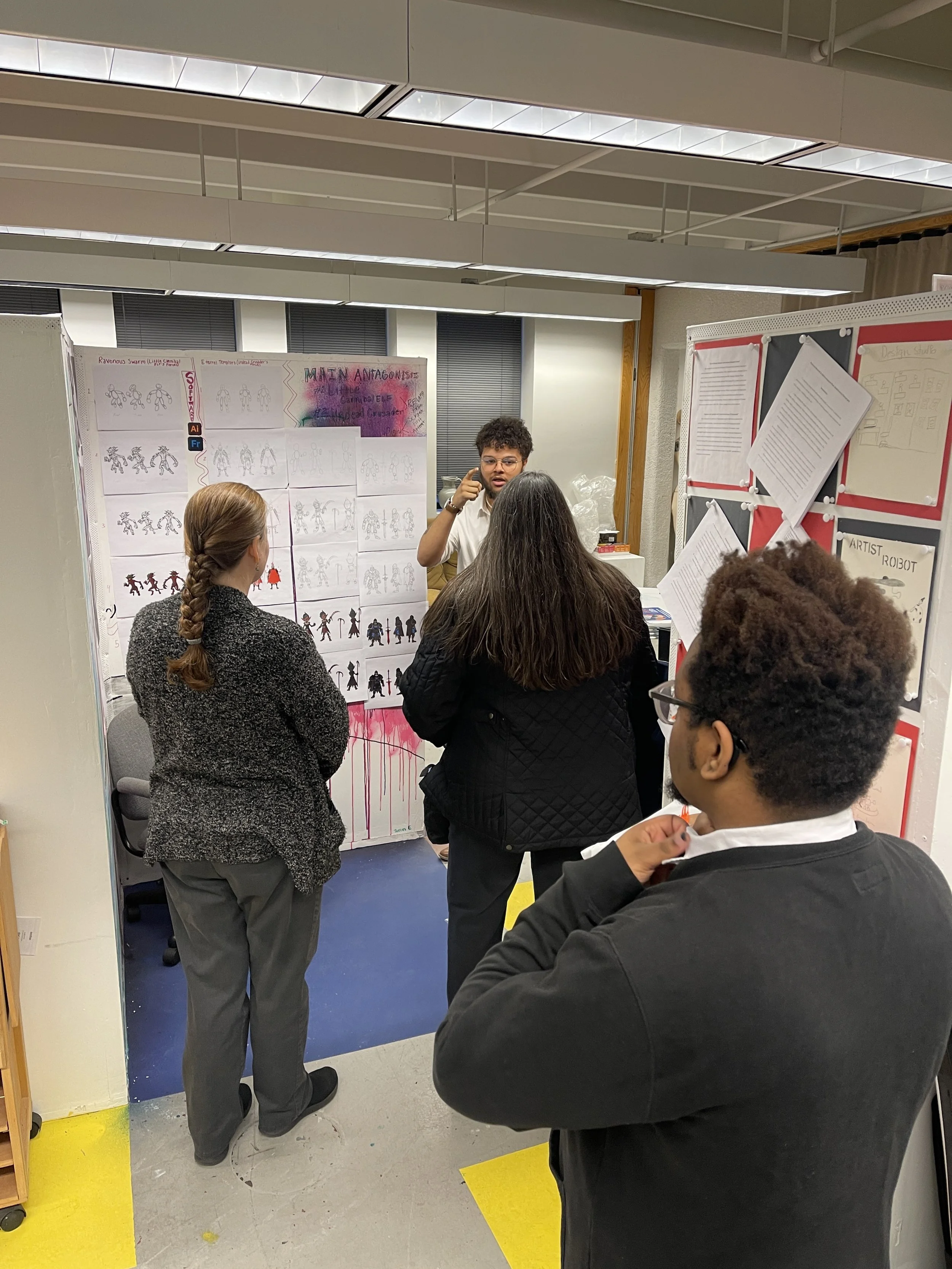
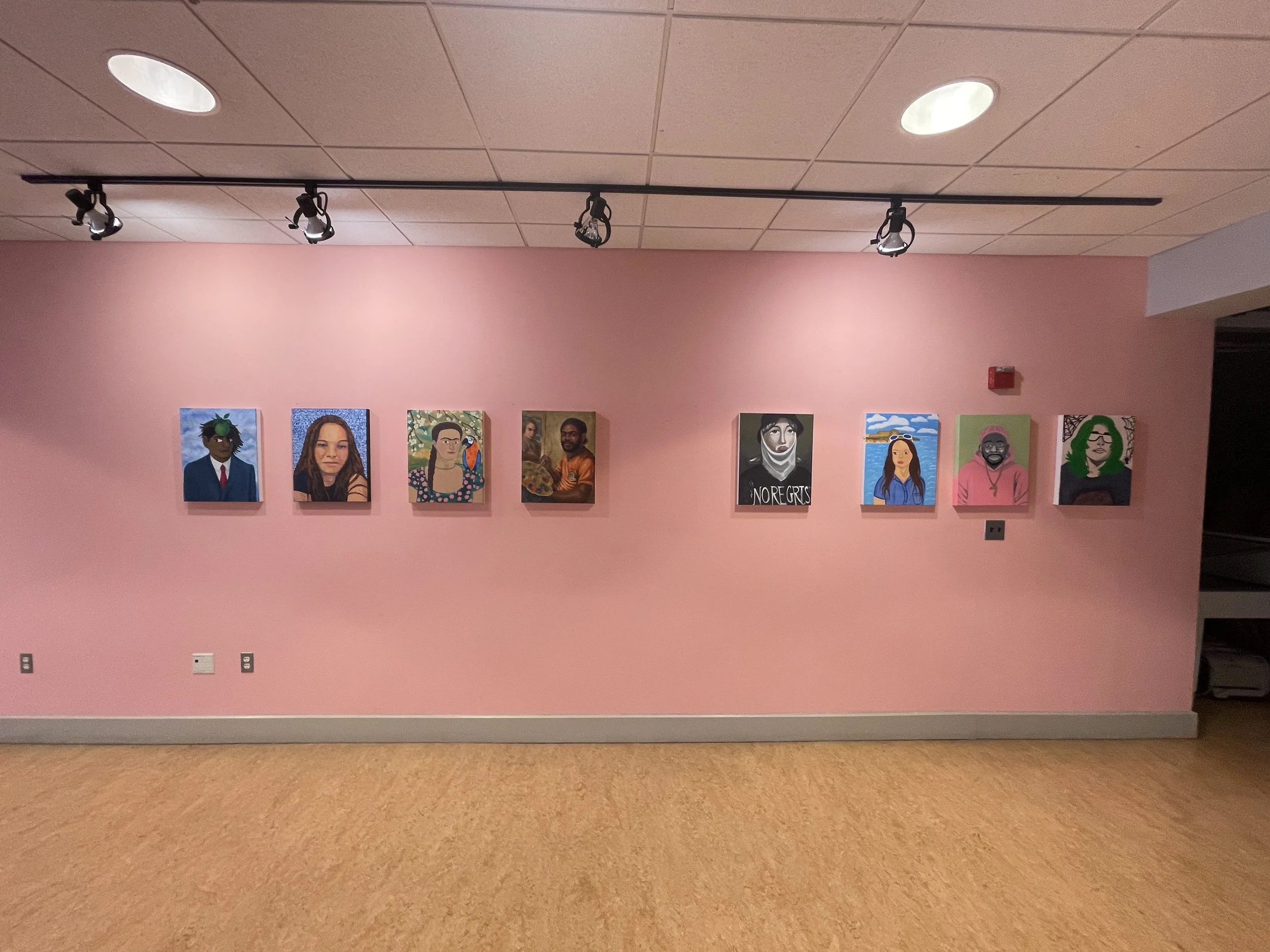
29. Hosted a university-wide exhibition event for ART 491students to present their portfolio, artwork, and exhibition (O_e)
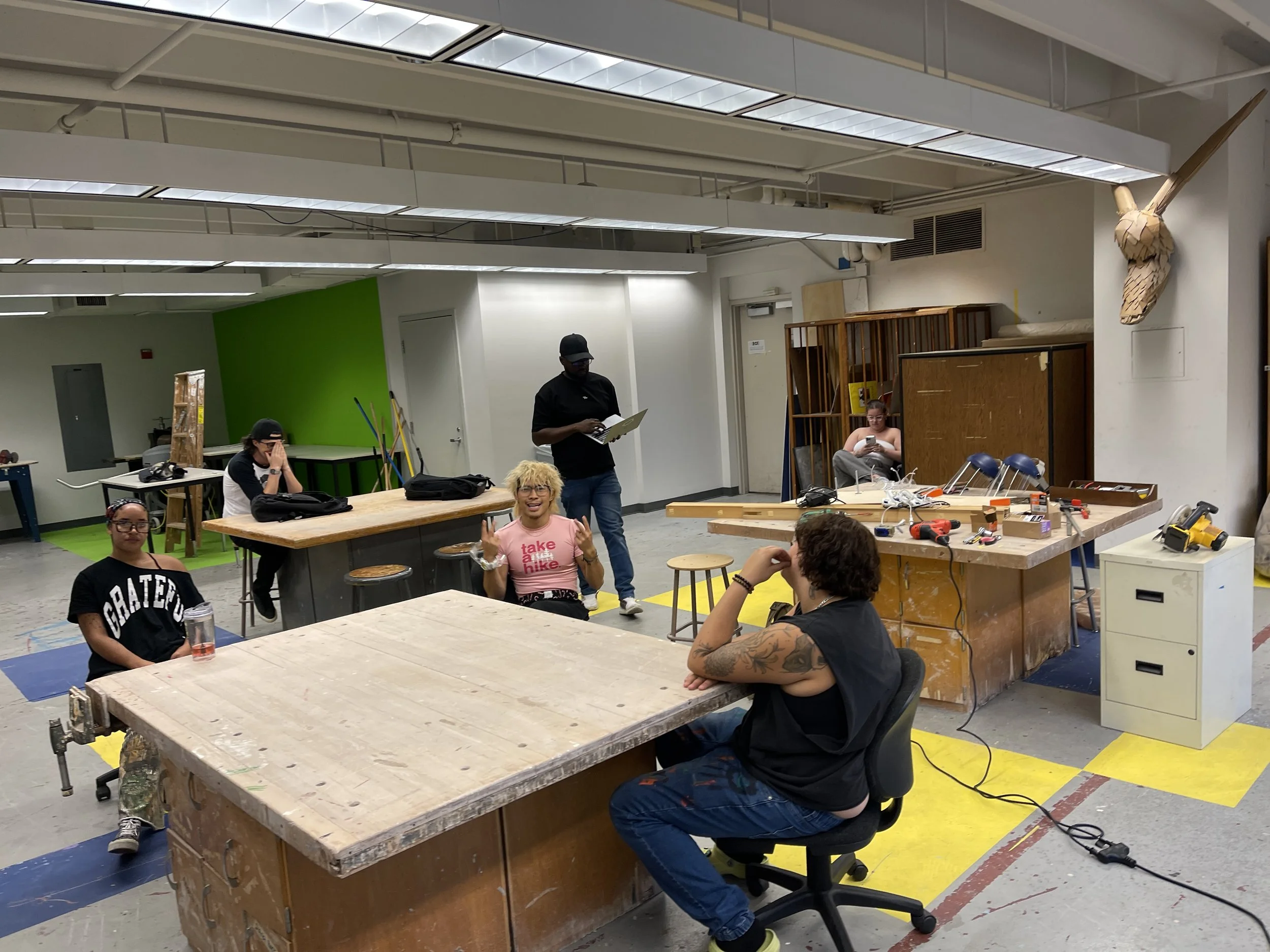
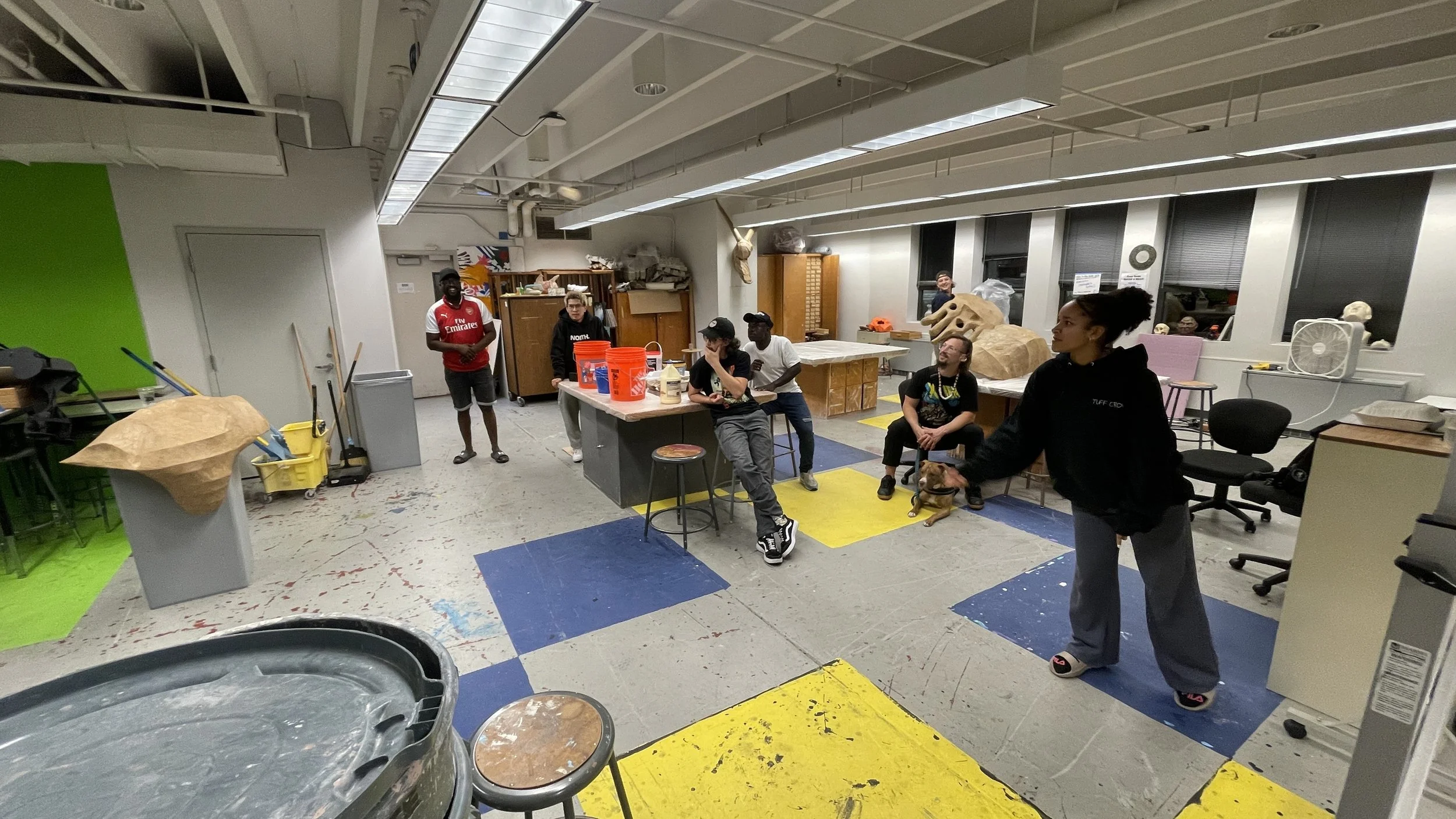
30. Supervised, facilitated, and operate Tinkerlab: worked and assigned the Tinkerlab Knowledge Assistants as interns for their work and learn opportunity. (O_e)
FALL 2025
ART 360.01 STUDIES IN SCULPTURE 7
ART 490.01 SENIOR STUDIO 5
ART 499.01 INDEPENDENT STUDY (3) 1
B. List of other teaching-related activities (e.g., dissertation committees, course development, unique features, etc.) During the evaluation period.
FALL 2025
1. Developed and upgraded three course syllabi with clearly articulated expectations. (S_a)
2. Applied pedagogical strategies aligned with higher education standards across three courses. (S_b)
3. Updated and posted weekly assignments on Blackboard Ultra. (S_c)
4. Recorded attendance using Blackboard and Workday systems. (S_c)
5. Delivered bilingual instruction using American Sign Language (ASL) and written English. (S_c)
6. Regularly held scheduled classes. (S_d)
7. Maintained accessibility and responsiveness to students beyond standard office hours. (S_d)
8. Extended office hours to accommodate student needs. (S_d)
9. Integrated instructional technology (dual screens, LCD projection, live demonstrations) to enhance learning. (S_e)
10. Participated in and supported Art Department meetings. (S_f)
11. Participated in School of Art and Humanities meetings. (S_f)
12. Supported curriculum priorities through updates to syllabi, lectures, and lesson plans. (S_f)
13. Managed and inventoried course supplies, meeting ordering deadlines for ART 360, 490, and 499. (S_g)
14. Maintained academic advising responsibilities for four students. (S_h)
15. Contributed to the transformation of the Art Department curriculum, including course titles and content. (C_a)
16. Presented 15-minute seminars on diverse artists’ biographies and socio-cultural contexts using PowerPoint. (C_b)
17. Assisted in developing and revising courses and syllabi for ART 360, 490, and 499. (C_c)
18. Coordinated field trips and external engagement, including Red Dirt Open Studio, ConFab Juried Exhibition, DMV open studios, and Linda K. Jordan Gallery. (C_c)
19. Designed and implemented an Independent Study course for a mural artist, aligning individualized work with Senior Studio expectations. (C_d / O_b)
20. Facilitated structured student presentations, guiding students through professional processes from concept to final presentation. (C_b)
21. Provided individualized tutoring and mentorship beyond the classroom. (O_b)
22. Developed art video tutorials to support extended learning outside of class. (O_b)
23. Reserved and utilized Washburn Art Center spaces for students to preview and present work (ART 360/490/499). (O_b)
24. Created ASL video content and written English materials for assignments, midterms, and final exams to ensure accessibility. (O_b)
25. Developed and implemented an updated course structure for ART 490 Senior Studio. (O_d)
26. Hosted a university-wide Open Studio and presentation event for ART 490 students in WAC Lobby/221/222. (O_e)
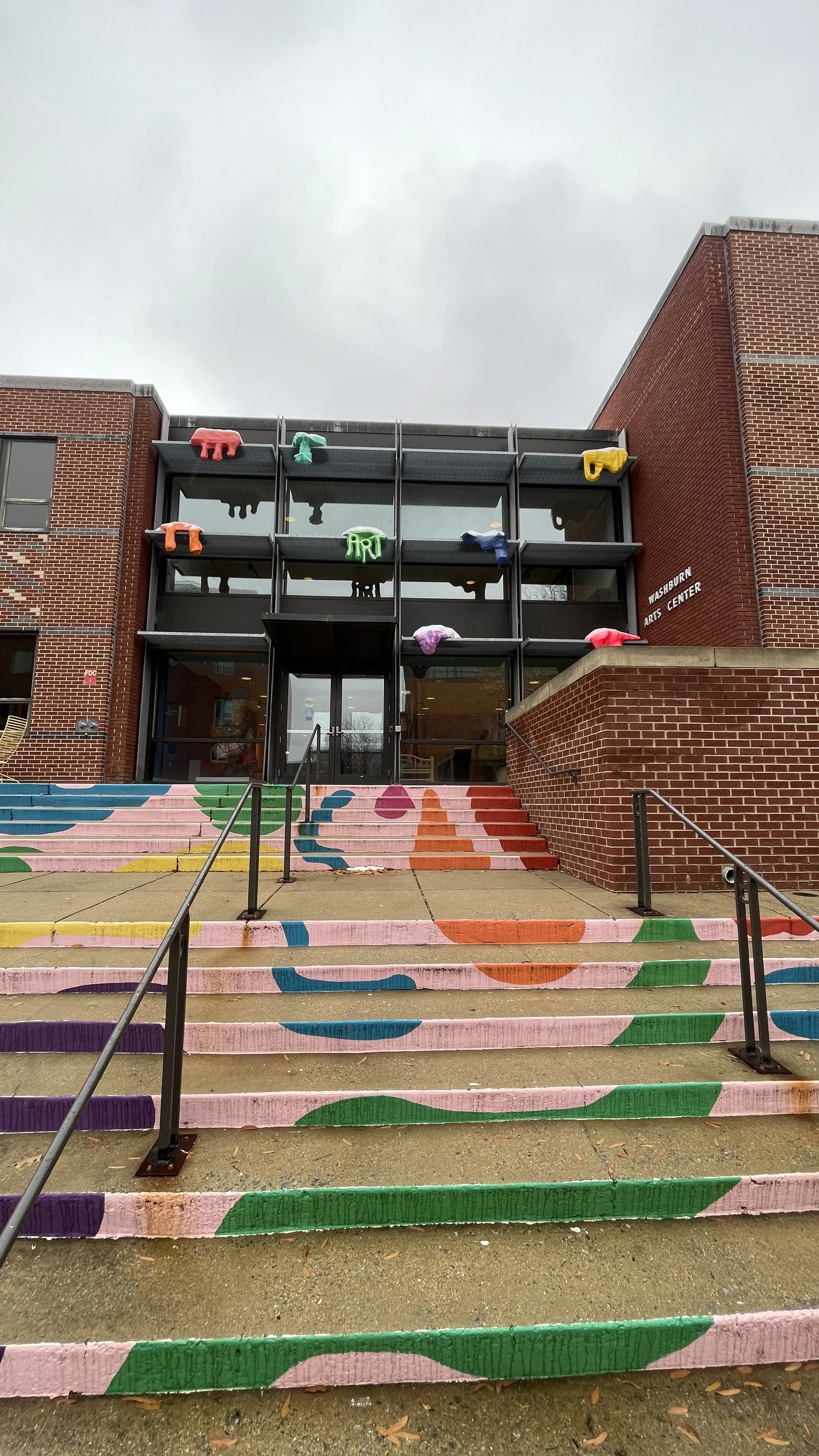
27. Established a mural installation space in the Washburn Art Center lobby to support student creative practice and public engagement. (O_b)
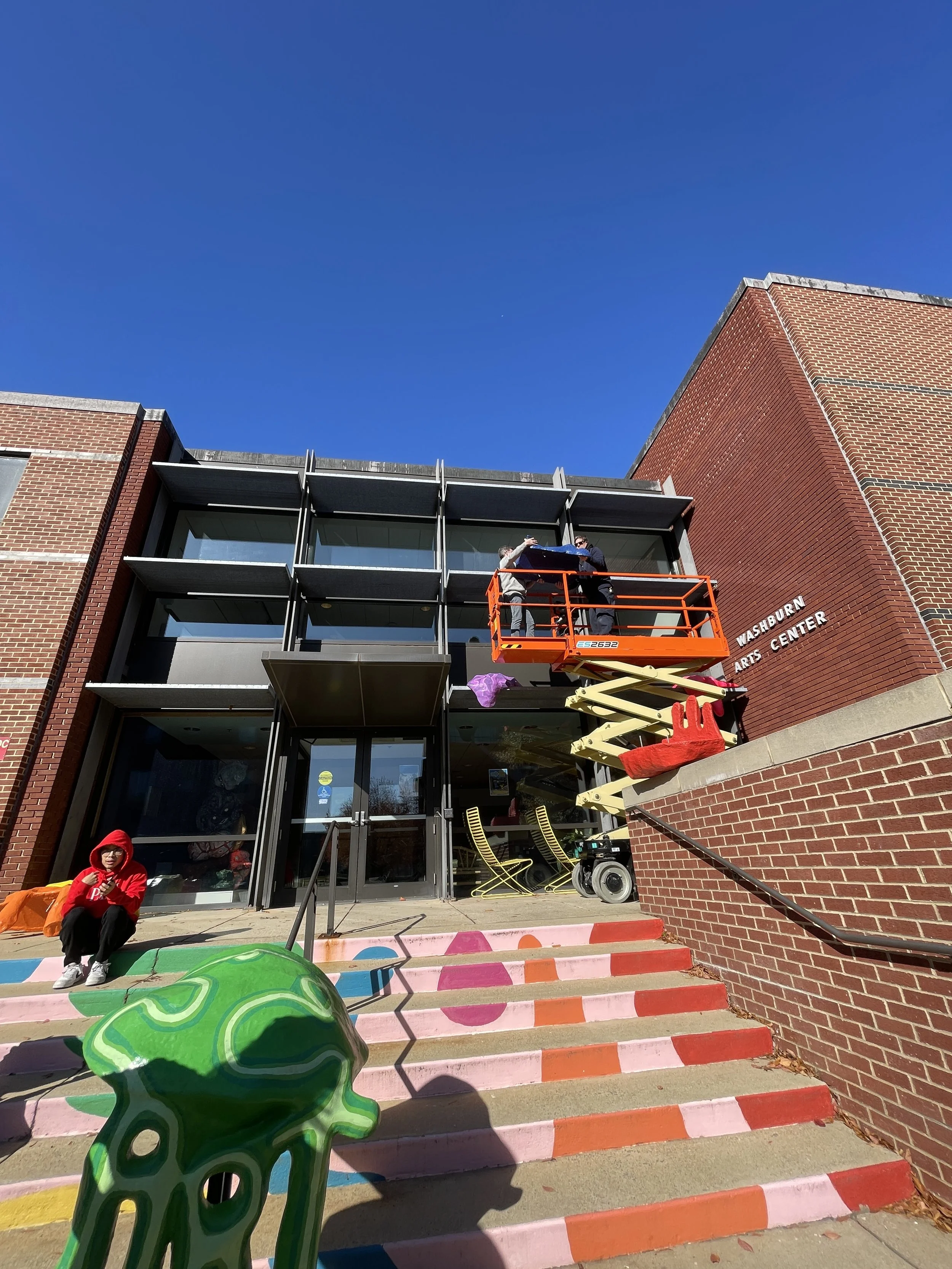
28. Coordinated with Facilities to install outdoor sculptural works at the Washburn Art Center using specialized equipment (scissor lift: Vertical Mast Lift). (O_e)
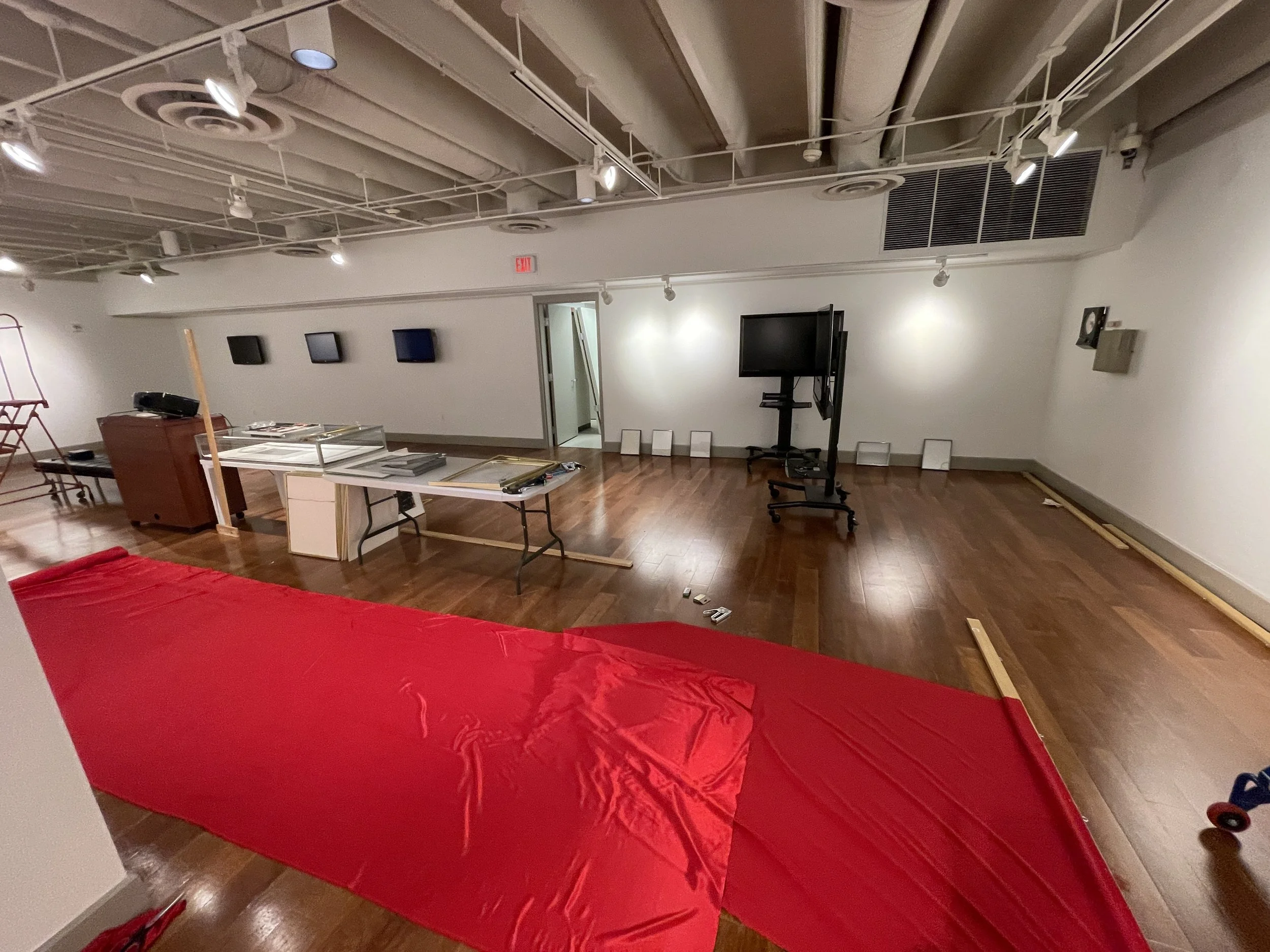
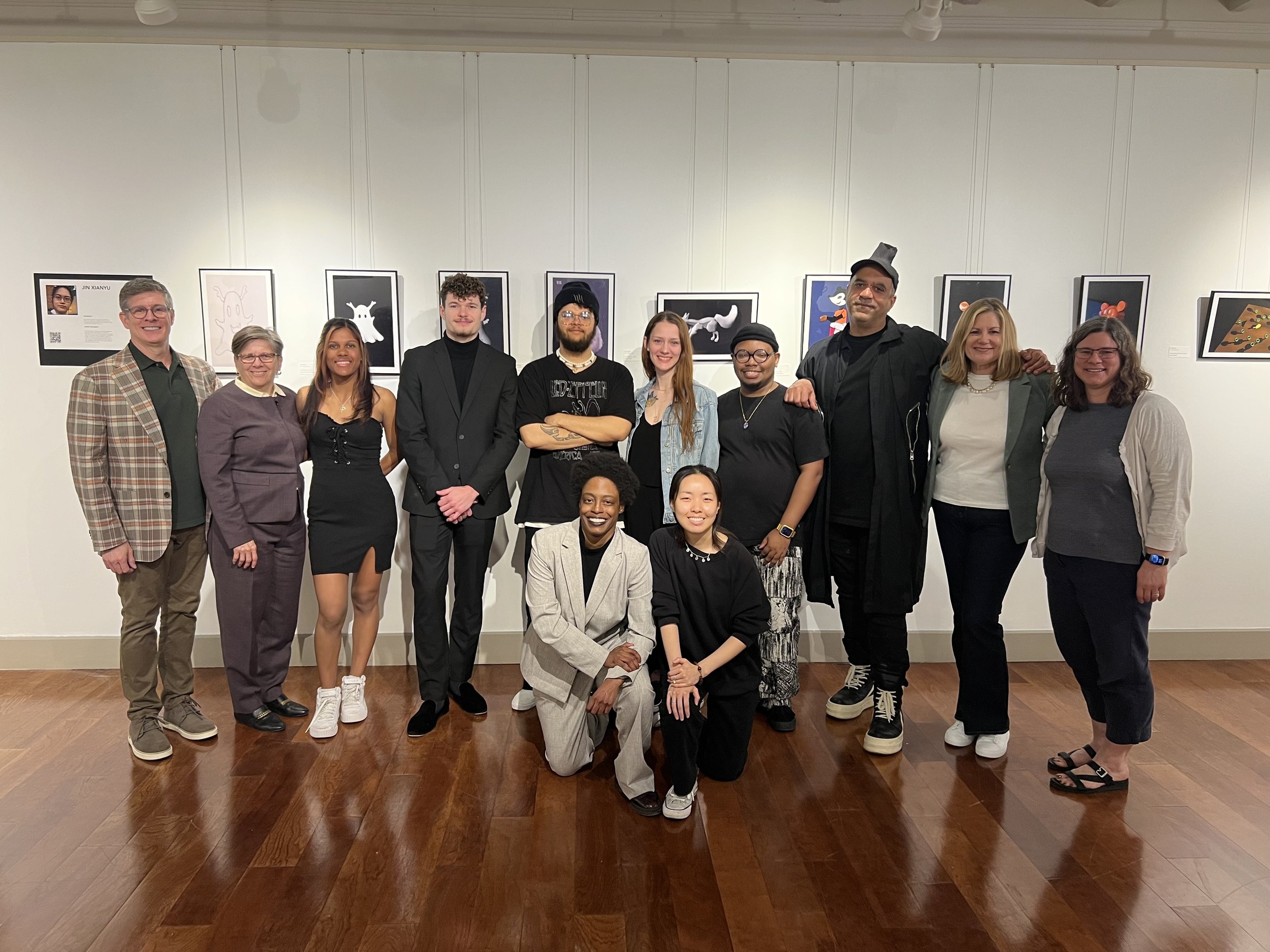
29. Coordinated and executed an end-of-semester exhibition for ART 360 and ART 490 in collaboration with Art, Culture, and Engagement (ACE) at the Linda K. Jordan Gallery. (O_e)
30. Directed ART 490 Open Studio presentations, providing professional exhibition experience. (O_b)
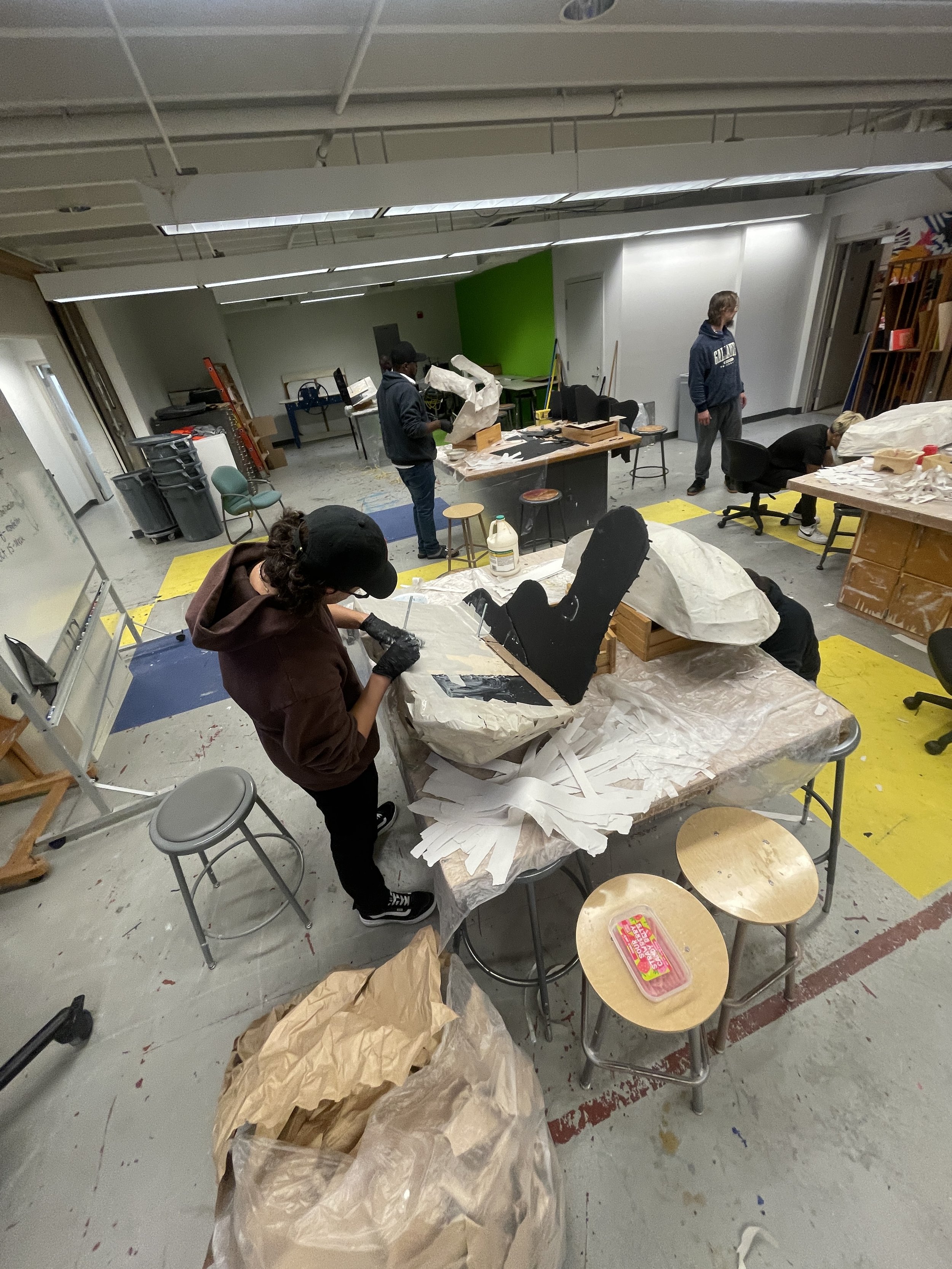
31. Oversaw ART 360 final exhibition of sculptural works, including wall-mounted installations. (O_b)
During the 2025 evaluation period, Professor Mava demonstrated a high level of teaching effectiveness that meets and exceeds the standards for Satisfactory and Commendable performance, with clear evidence of Outstanding impact. His teaching practice reflects sustained instructional quality, accessibility, curriculum innovation, student mentorship, professional preparation, and expanded learning opportunities beyond the classroom.
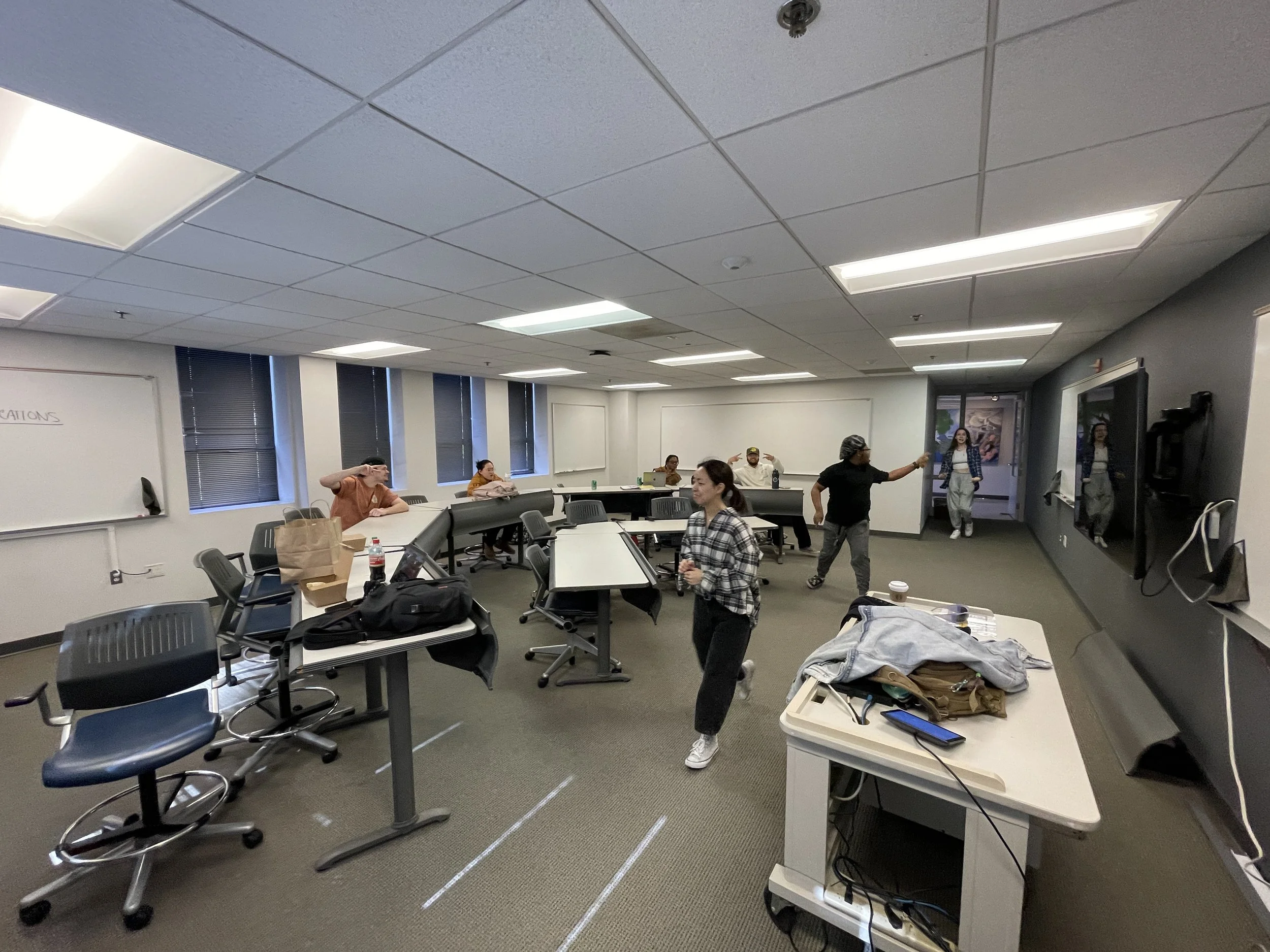
Throughout the year, Professor Mava structured his courses with clarity and alignment with higher education standards. He developed and upgraded multiple syllabi across Spring and Fall 2025, clearly articulating course expectations, assignments, grading criteria, and learning outcomes. His teaching balanced lectures, demonstrations, hands-on studio practice, critique, and professional development across courses such as VEE 150, ART 360, ART 470, ART 490, ART 491, and ART 499. Instruction was delivered bilingually through American Sign Language and written English, supporting accessibility, clarity, and effective communication for diverse learners.
Professor Mava maintained a strong instructional presence by holding all scheduled classes, maintaining weekly and biweekly coursework through Blackboard Ultra, updating course materials and assignments, and tracking attendance through institutional systems. He extended his availability beyond regular office hours to provide individualized, student-centered support. He also fulfilled academic advising responsibilities, supporting students through their academic development, course planning, and creative growth.
His pedagogy integrated instructional technologies to support visual learning and technical understanding. These included dual-screen projection, live demonstrations, instructional art video tutorials, digital demonstrations, and social media tools. He also created ASL video content paired with written English materials for assignments, midterms, and final exams. These resources allowed students to revisit instructions, technical processes, and assessment expectations outside of class, strengthening accessibility and independent learning.
Beyond foundational expectations, Professor Mava contributed significantly to curriculum innovation and program development. During Spring 2025, he actively participated in the transformation of the Art curriculum and developed new and revised course structures. During Fall 2025, the Dean and Provost granted him a course release to support focused engagement in transforming the Art program into the Art + Visual Communication Design program. He invested substantial time in research, advisory meetings, curriculum design, and documentation, including developing a four-year academic plan spanning three specializations. This work involved collaboration with faculty, artists, designers, and external stakeholders to ensure alignment with institutional goals, accessibility, and industry standards.
This program transformation directly informed and strengthened his teaching. Professor Mava revised course content, titles, syllabi, and assignments to better align with the future direction of the Art + Visual Communication Design program. He contributed to course frameworks for ART 360, ART 490, and ART 499 and developed new course structures that emphasized professional practice, portfolio development, exhibition preparation, exit interviews, and public presentation. These efforts reflect a clear connection between curriculum development, student learning outcomes, and future career preparation.
Professor Mava also enriched students' learning by exposing them to diverse artists, sociocultural contexts, and professional art environments. He offered short seminars on artist biographies, contemporary art practices, and cultural frameworks to encourage critical engagement and awareness. He coordinated field trips to major institutions and professional art spaces, including the National Museum of African Art, Hirshhorn Museum and Sculpture Garden, National Gallery of Art, Linda K. Jordan Gallery, Red Dirt Open Studio, the ConFab Juried Exhibition, local DMV galleries, and the Maryland Institute College of Art. The visit to MICA connected students with a Deaf graduate student and reinforced pathways into advanced study.
At the Outstanding level, Professor Mava created learning opportunities that extended beyond traditional classroom instruction. He mentored and tutored students individually, developed instructional video tutorials, and supported students through concept development, technical experimentation, critique, revision, installation, and public presentation. He also designed and supervised structured, hands-on learning experiences for Tinkerlab interns, creating a work-based learning environment that bridged academic instruction with professional practice.
Professor Mava emphasized professional preparation by creating real-world exhibition and presentation opportunities for students. He reserved and used the Washburn Art Center spaces for students to preview, install, and present their work. He directed ART 490 Open Studio presentations in a public-facing format and established a mural installation space in the Washburn lobby to encourage site-specific work, visibility, and community engagement. He also designed and supervised an Independent Study for a mural artist, aligning individualized creative practice with Senior Studio expectations.
He coordinated complex installation and exhibition projects that provided students with direct experience of professional standards. He worked with Facilities to install outdoor sculptural works using specialized equipment and organized a collaborative end-of-semester exhibition for ART 360, ART 490, and ART 499 in partnership with Art, Culture, and Engagement at the Linda K. Jordan Gallery. These experiences introduced students to installation logistics, exhibition planning, public engagement, and professional presentation.
In Spring 2025, Professor Mava also supported students through professional-level experiences related to portfolio development, exhibition preparation, and exit interviews as part of the pilot process to transform the Art program into the Art + Visual Communication Design program. Students had opportunities to preview and install their work at the Washburn Art Center and the Linda K. Jordan Gallery. This culminated in a university-wide exhibition event organized and hosted by Scott Carollo and Professor Mava, where students presented portfolios and completed works in a public, professional setting.
Overall, Professor Mava’s 2025 teaching reflects a broad and forward-looking approach. He integrates accessibility, bilingual instruction, technical innovation, curriculum development, individualized mentorship, and professional practice. His work goes beyond standard instructional expectations by connecting classroom learning to exhibitions, public presentations, career preparation, and program transformation. This level of engagement, leadership, and impact strongly supports an Outstanding rating in teaching.